
Hydraulic Hose Fittings Manufacturer: How to Qualify the Right Supplier




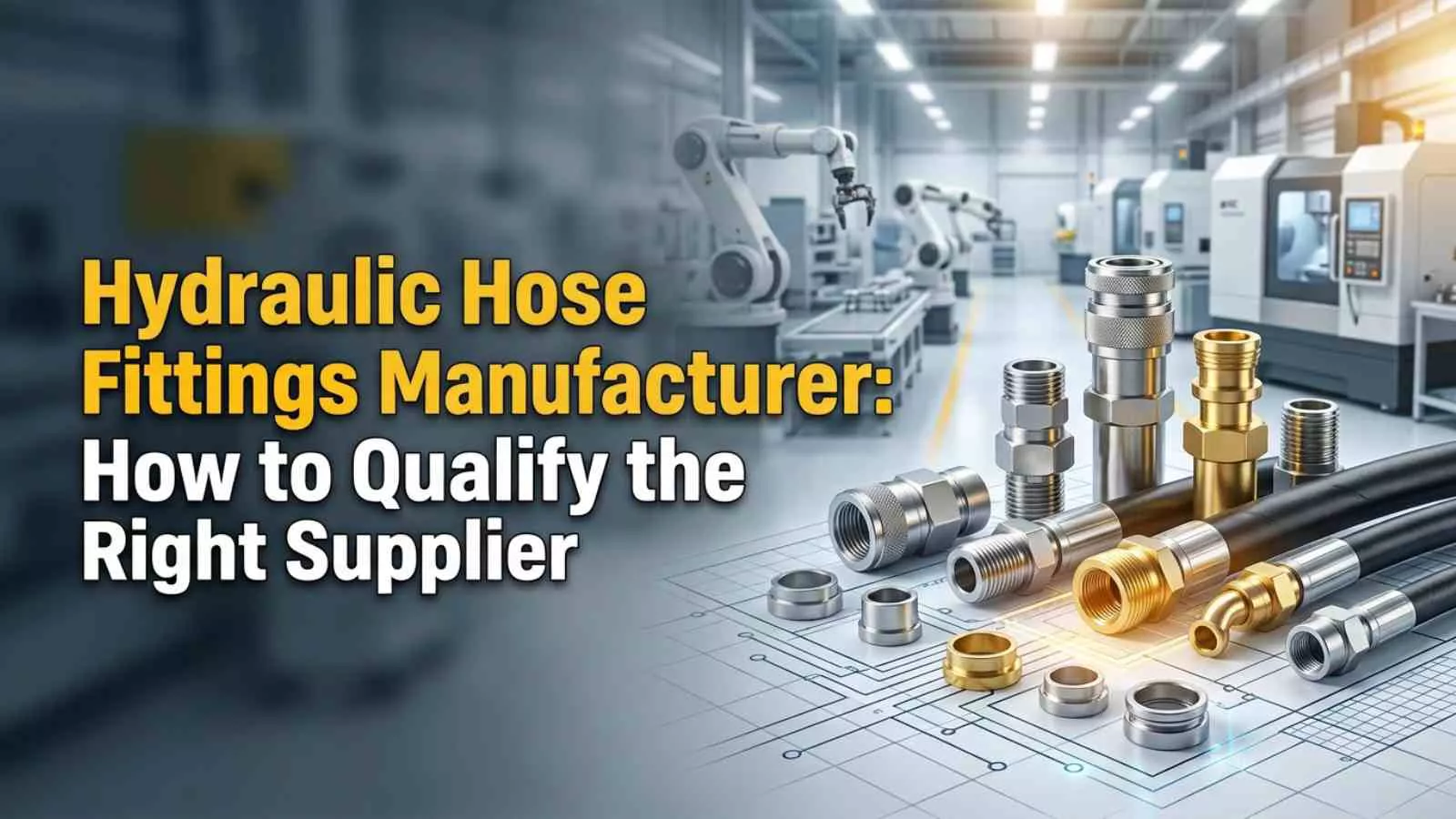
Choosing the right hydraulic hose fittings manufacturer is an important sourcing decision for OEMs, equipment manufacturers, distributors, and industrial buyers. A fitting may be a relatively small component, but its dimensions, connection standard, material, pressure capability, and manufacturing consistency can directly affect hydraulic system performance. For procurement teams, the lowest quotation is therefore rarely enough to determine the right supplier. A more reliable approach is to evaluate the manufacturer's product coverage, production capability, quality control, customization support, and ability to maintain consistent supply. This guide explains the key factors buyers should consider when qualifying a hydraulic hose fittings manufacturer, what information to include in an RFQ, and how to compare manufacturers before committing to long-term supply.
Table of Contents
- What Should a Hydraulic Hose Fittings Manufacturer Provide?
- 7 Criteria for Qualifying a Hydraulic Hose Fittings Manufacturer
- How to Verify a Hydraulic Hose Fittings Manufacturer
- What Information Should Buyers Include in an RFQ?
- Manufacturer vs. Trading Company: Which Should Buyers Choose?
- Hydraulic Hose Fittings Manufacturer Evaluation Checklist
- Why Choose HGW as Your Hydraulic Hose Fittings Manufacturer?
- Conclusion & Quote Request
What Should a Hydraulic Hose Fittings Manufacturer Provide?
A capable manufacturer should offer more than a basic selection of fittings. Its product range should match the connection standards, sizes, materials, and application requirements of the hydraulic systems being served.
Standard Hydraulic Hose Fittings
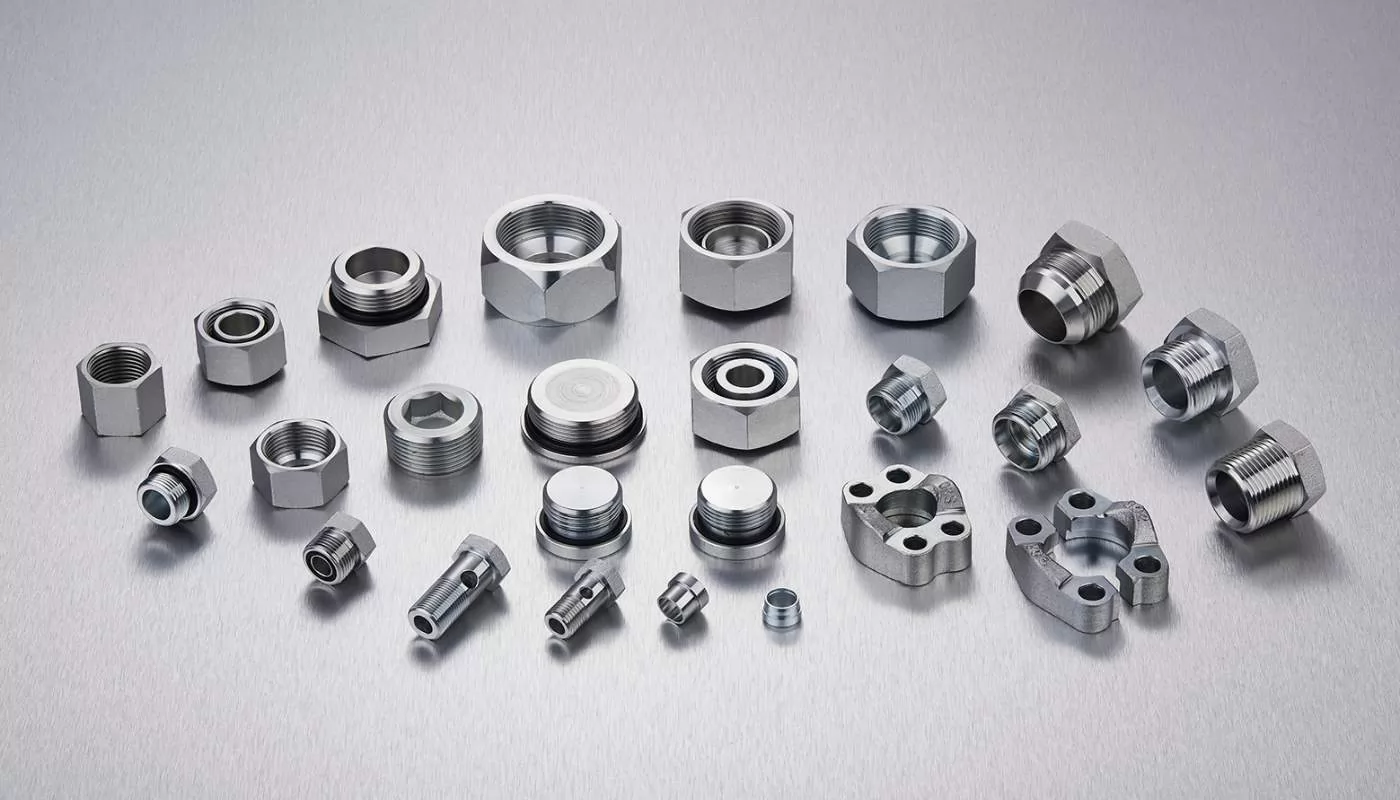
Common product categories include hose ends, elbows, tees, adapters, and other fittings designed for hydraulic hose connections. Depending on the market, buyers may require JIC, BSP, NPT, Metric, ORFS, SAE, DIN, or other connection standards. Buyers should confirm thread type, size, sealing method, pressure rating, and material rather than assuming that fittings with similar appearances are interchangeable. Discover our comprehensive range of hydraulic hose fittings engineered for high-pressure durability.
Adapters and Related Components
Hydraulic systems often require adapters and connection components in addition to hose fittings. Sourcing several related components from one qualified manufacturer can simplify supplier management and specification control. You can browse our complete hydraulic fitting catalog to evaluate integrated fluid power solutions.
Custom and OEM Hydraulic Fittings
OEM applications may require non-standard dimensions, special configurations, specific materials, or fittings manufactured according to customer drawings and samples. For these projects, buyers should assess the manufacturer's engineering and production capabilities before placing a bulk order.
7 Criteria for Qualifying a Hydraulic Hose Fittings Manufacturer
1. Product Range and Connection Standard Coverage
The first qualification step is determining whether the manufacturer can supply the required fitting types and connection standards. A broad catalog is useful, but product relevance matters more than the total number of items. Buyers should check whether the supplier regularly manufactures the exact sizes, thread forms, materials, and configurations required for the project.
For international sourcing, compatibility with regional standards is particularly important. A manufacturer familiar with multiple standards can reduce the risk of incorrect substitutions and simplify sourcing for equipment sold across different markets.
2. In-House Manufacturing Capability
Procurement teams should establish whether a company actually manufactures its hydraulic fittings or mainly purchases products from third-party factories. Direct manufacturing can provide greater visibility into machining, inspection, production scheduling, and quality control. It can also make technical communication easier when custom products are involved.
Key Production Audit Questions
- What machining processes are performed in-house?
- What production equipment is available?
- How are critical dimensions inspected?
- How is production capacity managed?
- Can the manufacturer support repeat orders?
The objective is not simply to count machines. Buyers need to determine whether the manufacturer has the production capability required for their specific products and order volumes. Explore our full array of precision-machined hydraulic fittings and adapters to see our direct production output.
3. Material Selection and Traceability
Material selection affects fitting strength, corrosion resistance, service life, and application suitability. Depending on the hydraulic environment, buyers may specify carbon steel, stainless steel, or other materials. Surface treatment may also be important when fittings are exposed to moisture, chemicals, temperature changes, or demanding operating conditions.
A qualified hydraulic fitting manufacturer should be able to identify the materials used for the quoted products and provide relevant documentation when required. For projects with strict quality requirements, material traceability can become especially important.
4. Dimensional Accuracy and Thread Quality
Hydraulic fittings depend on accurate dimensions and properly manufactured threads to achieve reliable connections. Small dimensional deviations can cause installation problems, leakage, poor sealing, or incompatibility with mating components. Buyers should therefore examine how the manufacturer controls critical dimensions during machining and final inspection.
5. Pressure and Performance Verification
Hydraulic hose fittings operate within pressurized systems, making pressure performance a critical qualification factor. Buyers should ask for relevant working-pressure specifications and determine whether the fitting is appropriate for the intended hose and application.
For demanding applications such as construction equipment, mining machinery, marine systems, and industrial hydraulic equipment, documented testing and technical records can provide valuable evidence of product suitability.
6. OEM and Custom Manufacturing Capability
Standard products are not always sufficient for OEM applications. As a leading custom hydraulic hose fittings manufacturer, a supplier should have a clear process for handling customer-specific requirements, including drawing review, sample development, prototype approval, production confirmation, and final inspection.
7. Quality System and Supply Reliability
A supplier should be evaluated on its ability to maintain quality over repeated orders, not only on the quality of an initial sample. Procurement teams should review incoming material control, machining, surface treatment, final inspection, packaging, and nonconforming-product procedures.
Request a Hydraulic Fitting Quote
How to Verify a Hydraulic Hose Fittings Manufacturer
Supplier claims should be supported by evidence wherever possible. A practical qualification process can include four steps:
- Check the Manufacturing Facility: Determine whether the supplier has actual production and inspection infrastructure through photos, videos, virtual tours, or on-site visits.
- Review Technical Documents and Samples: Request product drawings, specifications, material information, and pressure data to check against required dimensions.
- Verify Quality and Traceability: Request inspection reports, material certificates, and certificates of conformity where necessary.
- Conduct an Audit and Trial Order: Execute a factory audit for strategic suppliers and place a smaller trial order to gather practical evidence of performance.
What Information Should Buyers Include in an RFQ?
A complete RFQ helps a hydraulic hose fittings supplier provide an accurate quotation and reduces unnecessary clarification:
| RFQ Information | Purpose |
|---|---|
| Fitting Type | Identifies the required configuration |
| Connection Standard | Confirms thread and sealing requirements |
| Size | Ensures hose and component compatibility |
| Material | Determines strength and corrosion requirements |
| Working Pressure | Confirms application suitability |
| Fluid Type & Temp | Helps determine material/sealing and defines operating conditions |
| Quantity & Application | Supports pricing, production planning, and technical context |
| Drawing or Sample | Reduces ambiguity for custom products |
Manufacturer vs. Trading Company: Which Should Buyers Choose?
Both manufacturers and trading companies can have a role in hydraulic component sourcing. The better option depends on the purchasing requirement:
| Factor | Direct Manufacturer | Trading Company |
|---|---|---|
| Production Control | Direct | Depends on factory partners |
| Customization | Usually stronger | Depends on partner |
| Technical Communication | More direct | May involve an intermediary |
| Quality Control | Direct production control | Requires supplier coordination |
| OEM Projects | Generally suitable | Depends on factory |
| Lead-time & Spec Control | Direct and easier | Dependent on supplier / Requires coordination |
Hydraulic Hose Fittings Manufacturer Evaluation Checklist
Weighted Evaluation Model
A weighted evaluation model can make supplier comparison more objective:
| Evaluation Factor | Suggested Weight |
|---|---|
| Product Compatibility | 15% |
| Manufacturing Capability | 15% |
| Quality Control | 20% |
| Material Traceability | 10% |
| Pressure Performance | 15% |
| OEM/Customization | 10% |
| Standards & Certifications | 5% |
| Supply Reliability | 10% |
| Total | 100% |
Why Choose HGW as Your Hydraulic Hose Fittings Manufacturer?
HGW Hydraulics: Premier Direct Manufacturing Partner
HGW provides high-precision hydraulic hose fittings, adapters, and related hydraulic connection products for demanding industrial applications. Its broader hydraulic product portfolio can help buyers consolidate sourcing when multiple fitting and adapter requirements are involved.
The company positions itself as a premier manufacturer with substantial production infrastructure and engineering support. You can learn more about our HGW manufacturing capabilities and custom prototyping services for OEM projects.
Inquire About Hose Fittings Now
Conclusion & Quote Request
Selecting a hydraulic hose fittings manufacturer should go beyond comparing unit prices. A reliable supplier should demonstrate suitable product coverage, manufacturing capability, material control, dimensional accuracy, pressure performance, customization support, and consistent supply. Buyers should verify these capabilities through technical documents, samples, factory evaluations, and trial orders where appropriate.
A detailed RFQ can further reduce sourcing errors by clearly defining fitting type, connection standard, size, material, pressure, application, quantity, and other critical requirements. For OEMs and industrial buyers, the best supplier is ultimately the one that can consistently meet the required specification while providing dependable production and technical support.
Ready to Partner with a Trusted Manufacturer?
Send HGW Hydraulics your drawing, sample, or detailed technical specifications. Our engineering team will review your requirements and provide an accurate quotation for your hydraulic connection needs.


-
2025 Shanghai Bauma Exhibition China International Construction Machinery ExhibitionUpdate on 2025-10-17
-
2025 Las Vegas International Mining ExhibitionUpdate on 2025-10-17
-
Leading the High-End and Empowering the World | Bauma China 2025, Hgw Successfully ConcludedUpdate on 2025-10-17
-
Hgw's Multi-field Hydraulic Products Appeared at the Exhibition丨MINEXPOUpdate on 2025-10-17
-
2025 PTC ASIAUpdate on 2025-10-17
-
Top 10 Leading Hydraulic Fitting Manufacturers List in the World [2026 Updated]Update on 2026-05-17
-
Top 10 Global Suppliers of Hydraulic Hose FittingsUpdate on 2025-03-04
-
HGW's O-Ring Face Seal Fittings(ORFS): From Core to Best UseUpdate on 2025-03-08


